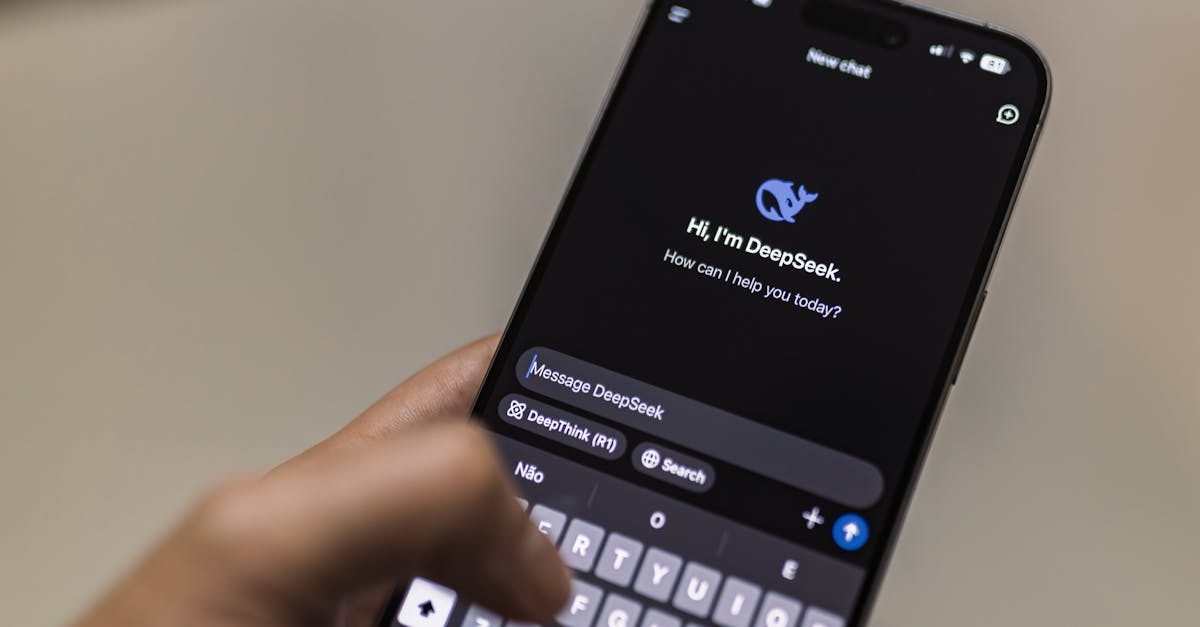
DeepSeek went from relative obscurity to serious contender in a matter of months. Its R1 model matches or beats GPT-4o on several benchmarks, and it does so at a fraction of the cost. But benchmarks don’t tell the whole story. ChatGPT has years of ecosystem development, multimodal features, and a user base that dwarfs every competitor.
Here’s how they actually compare when you sit down and use them.
Quick Comparison
| Feature | DeepSeek R1 | ChatGPT (GPT-4o) |
|---|---|---|
| Price (API, input) | $0.55/M tokens | $2.50/M tokens |
| Price (API, output) | $2.19/M tokens | $10.00/M tokens |
| Consumer plan | Free (web/app) | Free (limited) / Plus $20/mo |
| Context window | 128K tokens | 128K tokens |
| Open source | Yes (MIT license) | No |
| Image generation | No | Yes (DALL-E) |
| Voice mode | No | Yes |
| Web browsing | Limited | Yes |
| Plugin ecosystem | No | Yes (GPT Store) |
| Reasoning mode | Built-in (chain-of-thought) | o1/o3 (separate models) |
Pricing: DeepSeek Wins on Cost
The pricing gap is substantial. DeepSeek R1’s API pricing is roughly 4-5x cheaper than GPT-4o for both input and output tokens. For developers building applications, this difference compounds quickly — a workload that costs $100/month on OpenAI’s API might cost $20-25 on DeepSeek.
For individual users, DeepSeek’s web interface and mobile app are free with no usage caps (subject to rate limiting during peak hours). ChatGPT’s free tier limits access to GPT-4o and restricts image generation. The full ChatGPT experience requires Plus at $20/month.
If budget is your primary constraint, DeepSeek delivers strong performance at a price that’s hard to argue with.
Reasoning and Problem-Solving
DeepSeek R1 was built specifically for chain-of-thought reasoning. It breaks complex problems into explicit steps, showing its work as it goes. On mathematical reasoning benchmarks (MATH-500, AIME 2024), R1 performs comparably to OpenAI’s o1 model.
ChatGPT’s standard GPT-4o model is a strong general reasoner but doesn’t expose its reasoning chain by default. OpenAI’s dedicated reasoning models (o1, o3) do show chain-of-thought, but they’re separate from the main ChatGPT experience and come with higher costs and slower response times.
In practice: DeepSeek R1 handles multi-step logic, math problems, and analytical questions well. Its reasoning traces are transparent, which helps when you need to verify the logic. ChatGPT (GPT-4o) is faster for straightforward questions where you don’t need to see the reasoning process.
Coding
Both models are capable coders, but they approach the task differently.
DeepSeek R1 strengths:
- Strong performance on competitive programming benchmarks (Codeforces, LeetCode)
- Transparent reasoning makes debugging easier — you can see why it chose a particular approach
- Cost-effective for high-volume code generation via API
- Open-source model can be self-hosted and fine-tuned
ChatGPT (GPT-4o) strengths:
- Broader framework coverage and better handling of niche libraries
- Integrated code interpreter for running and testing code in-browser
- Tighter integration with development tools through plugins and the API ecosystem
- More consistent output formatting and documentation
For algorithm-heavy tasks and competitive programming, DeepSeek often edges ahead. For full-stack development with diverse frameworks and real-time code execution, ChatGPT’s ecosystem gives it an advantage.
For a deeper look at DeepSeek’s technical capabilities, read our DeepSeek review.
Daily Use and Accessibility
ChatGPT has spent years refining its user experience. The interface is polished, the mobile apps are mature, and features like voice mode, image generation, custom GPTs, and memory make it feel like a complete platform rather than just a chatbot.
DeepSeek’s interface is functional but minimal. It handles text conversations well, and the reasoning traces add genuine value for complex queries. But it lacks image generation, voice input, a plugin system, and the kind of workflow integrations that ChatGPT has built over time.
Where ChatGPT pulls ahead:
- DALL-E image generation built in
- Natural voice conversations
- Custom GPTs for specialized tasks
- Memory across conversations
- File upload and analysis
- Web browsing with citations
Where DeepSeek holds its own:
- Clean, distraction-free interface
- No paywall for core features
- Transparent reasoning on every response
- Fast response times for text tasks
If you mostly need a text-based AI for analysis, writing, and coding, DeepSeek covers those needs without costing anything. If you rely on multimodal features or have built workflows around ChatGPT’s ecosystem, switching would mean giving up a lot.
The Open-Source Factor
DeepSeek R1 is released under the MIT license. This means:
- Anyone can download and run the model locally
- Companies can deploy it on their own infrastructure without sending data to external servers
- Developers can fine-tune it for specific domains
- The model weights and training methodology are public
This matters for privacy-sensitive industries (healthcare, finance, legal) and for organizations that need full control over their AI stack. ChatGPT is a closed service — your data goes to OpenAI’s servers, and you’re subject to their terms, pricing changes, and availability.
For individual users, the open-source aspect is less relevant unless you have the hardware to run a 671B parameter model locally. But for teams and enterprises evaluating long-term AI strategy, it’s a meaningful differentiator.
Who Should Choose What?
| Your Situation | Better Pick |
|---|---|
| Tight budget, text-focused work | DeepSeek |
| Need image generation and voice | ChatGPT |
| API-heavy development (cost matters) | DeepSeek |
| Plugin ecosystem and integrations | ChatGPT |
| Privacy-sensitive / self-hosting | DeepSeek |
| Math and formal reasoning | DeepSeek |
| General-purpose daily assistant | ChatGPT |
| Coding with diverse frameworks | ChatGPT |
Can You Use Both?
Yes, and it’s a practical approach. Use DeepSeek for reasoning-heavy tasks, coding problems, and API workloads where cost matters. Use ChatGPT for image generation, voice mode, and tasks that benefit from its broader feature set.
Since DeepSeek’s web interface is free, adding it to your workflow costs nothing. You only need a ChatGPT Plus subscription if the free tier’s limits don’t cover your usage.
The Bottom Line
DeepSeek R1 is a genuinely impressive model that competes with GPT-4o on reasoning and coding at a fraction of the cost. But ChatGPT isn’t just a model — it’s a platform with years of features, integrations, and polish layered on top.
Choose DeepSeek if cost and reasoning transparency are your priorities. Choose ChatGPT if you need the full-featured AI assistant experience. There’s no rule that says you can’t use both.
Want to see how other AI tools stack up? Browse our best ChatGPT alternatives or read the full ChatGPT review.